Maybe you've been there before. You're crunching down on a piece of hard candy or ice and you suddenly feel something: a broken tooth. This can happen even in people with otherwise healthy teeth, and knowing what to do next can make a significant difference in the outcome.
What causes broken teeth?
Tooth fractures can occur for a number of reasons. Contact sports without a mouthguard, falls, automobile accidents, or simply biting down on something unexpectedly hard can all cause a tooth to crack or break. In some cases, teeth that have been weakened by decay or large fillings are more vulnerable to fracture.
Types of tooth fractures
Not all broken teeth are the same. Understanding the type of fracture helps your dentist determine the appropriate treatment:
Craze lines
Tiny surface cracks in the outer enamel. These are generally cosmetic and do not affect the function or structural integrity of the tooth.
Broken cusp
A fracture on one of the chewing surfaces of the tooth. This weakens the tooth and usually requires a crown or other restoration to protect it.
Cracked tooth
A deeper fracture that extends from the chewing surface toward the root. Early treatment is important. If left unaddressed, the crack can propagate and eventually affect the nerve.
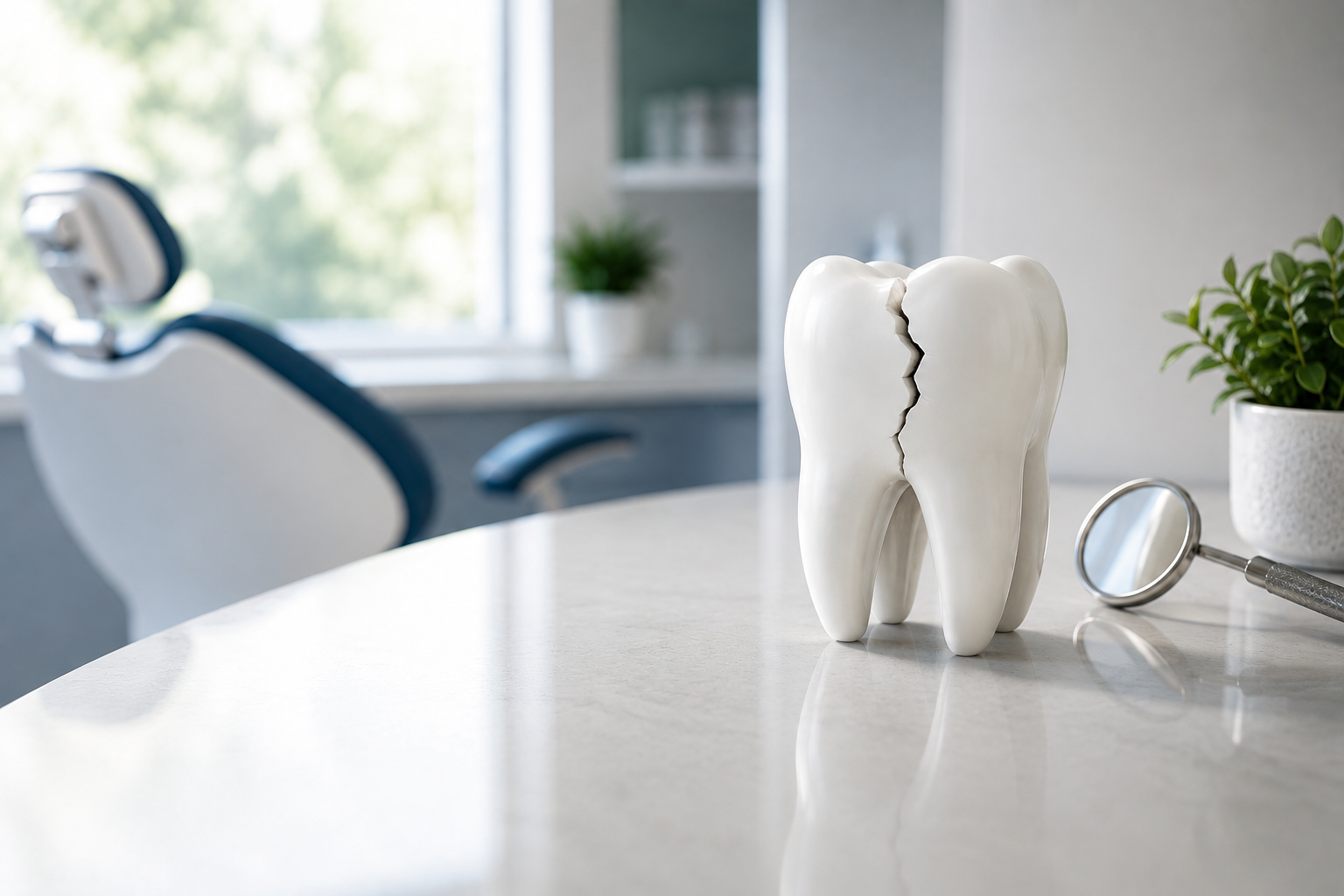
Split tooth
A severe fracture where the tooth has separated into distinct segments. In most cases, extraction is required, followed by a replacement option such as an implant or bridge.
Vertical root fracture
A fracture that starts in the root and extends upward. These can be difficult to detect because they may cause few or no symptoms until the surrounding bone and gum tissue become affected.
Why restoration matters
Whenever the structure of a tooth is compromised, it becomes weaker and more susceptible to further damage. A small crack that might be treatable with a crown today can become a split tooth requiring extraction tomorrow if it is left untreated. Decay can also enter through a crack and progress quickly once it reaches the inner layers of the tooth.
Addressing a broken tooth promptly also helps protect the surrounding teeth and tissues. An untreated fracture can affect your bite, irritate the gum tissue, and in some cases lead to infection.
Treatment options
The right treatment depends on the location and severity of the fracture. Common options include:
- Dental fillings for minor fractures with minimal structural damage
- Dental crowns to cover and protect a tooth that has lost significant structure
- Porcelain veneers for front teeth with cosmetically significant fractures
- Root canal therapy when a fracture has reached the pulp chamber and the tooth can be saved
If you have a broken or cracked tooth, we encourage you to book an appointment soon. The sooner we can assess the damage, the more options we typically have available to restore the tooth.
Call Wildwood Dental Clinic at 306.374.7272 or use our online booking form.