
Wildwood Dental Clinic
Diagnostic Services
Accurate diagnosis is the foundation of good dental care. The tools and techniques we use allow us to understand what is happening in your mouth before recommending any treatment.
Our approach
See what we see
A thorough visual examination is always the starting point, but many dental conditions develop in places that are not visible to the naked eye, between teeth, below the gumline, or inside the tooth structure itself. Diagnostic imaging and technology allow us to identify concerns earlier, plan treatment with greater accuracy, and share our findings with you clearly. We only recommend diagnostic tools when there is a clinical reason to do so, and we will always explain what we are looking for and why.
X-Rays & 3D Imaging
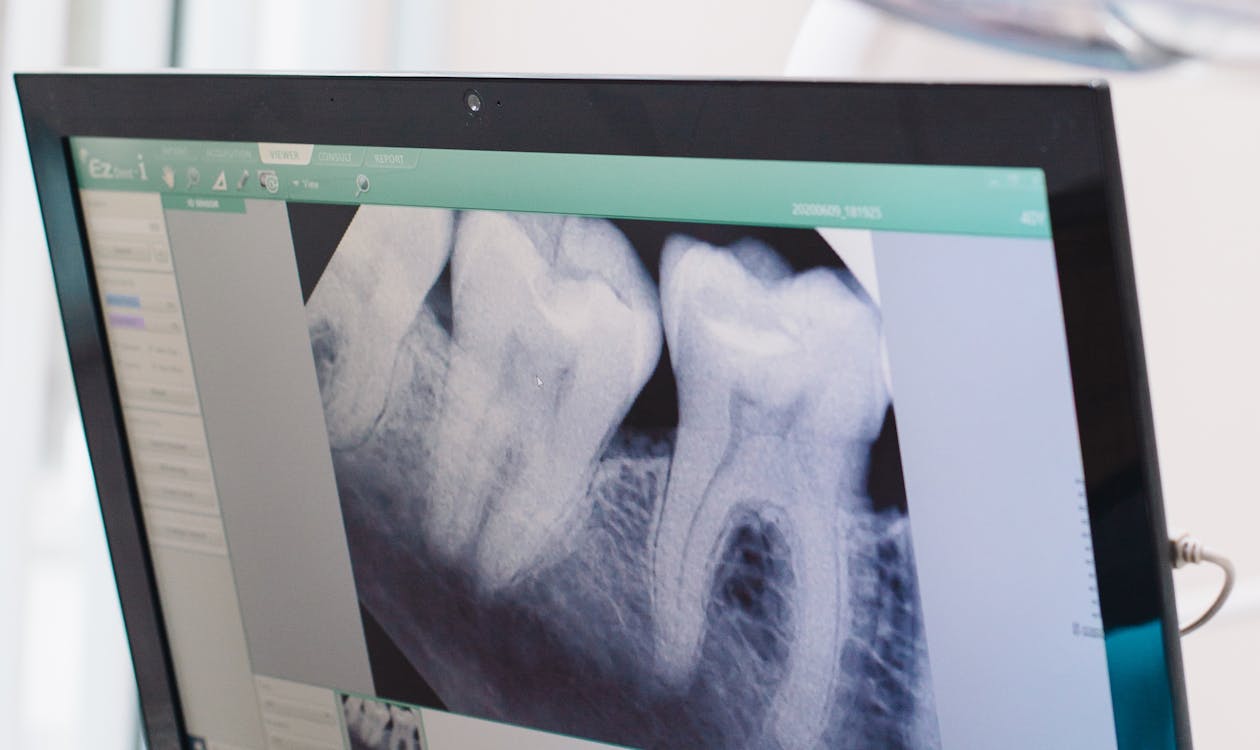
Digital x-rays reveal decay between teeth, monitor bone levels, and show anatomy below the gumline, areas that cannot be assessed by visual exam alone.
Learn MoreDiagnostic Images & Digital X-Rays
All imaging at Wildwood is captured digitally, with lower radiation than film, instant on-screen review with your dentist, and easy storage and transfer as part of your permanent records.
Learn MoreIntraoral Cameras
Small cameras allow us to show you exactly what we see inside your mouth, making it easier to understand findings and participate in decisions about your care.
Learn MoreCBCT Scans
Cone beam CT imaging produces three-dimensional views of teeth, bone, and anatomy. Used when two-dimensional x-rays do not provide sufficient detail for complex treatment planning.
Learn MoreOral Cancer Screening
A visual and tactile examination of the oral tissues at each routine visit helps detect changes that may warrant further investigation.
Learn MoreThe role of diagnostic imaging in dental care
Many dental problems begin in areas that cannot be seen during a standard visual examination. Cavities forming between teeth, infection developing around a root, early bone loss from gum disease, or changes in the anatomy of impacted teeth, these all require imaging to detect and monitor accurately.
Diagnostic tools also support more precise treatment. When a dentist can see the exact dimensions of a tooth, the shape of a root canal system, or the available bone before placing an implant, they can plan treatment with greater confidence and predictability.
The frequency and type of imaging recommended will vary based on your individual history, age, risk level, and what is being assessed. Diagnostic imaging is always a clinical decision, we discuss the rationale with you before proceeding.
Radiation and safety
All dental x-rays involve some exposure to ionizing radiation. Digital x-ray systems use significantly less radiation than older film-based systems, typically 70–90% less. Cone beam CT scans involve more radiation than standard dental x-rays, which is one reason they are used only when the diagnostic information they provide is clinically warranted and cannot be obtained through other means.
We follow evidence-based guidelines for imaging frequency and type, and we take into account each patient's individual circumstances. If you have questions about why a particular type of imaging is being recommended, we are happy to discuss it.
Ready to get started?
Call 306.374.7272 or request an appointment online.