
Endodontic Care
Traumatic Dental Injuries
Injuries to the teeth and surrounding structures require prompt assessment. Even when a tooth appears intact after a trauma, the pulp inside can be affected in ways that may not be immediately apparent.
Types of traumatic dental injuries
Dental trauma encompasses a range of injuries, from minor impacts that leave the tooth visually unchanged to more severe injuries involving fracture or displacement. Common types include:
Concussion and subluxation
The tooth is shaken by an impact but remains in its normal position. The supporting structures may be tender. There is no displacement of the tooth.
Lateral luxation
The tooth is displaced sideways or at an angle from its socket, often accompanied by fracture of the surrounding bone.
Intrusion
The tooth is driven further into the socket, displacing it downward into the bone.
Extrusion
The tooth is partially displaced out of the socket, it may appear elongated or loose.
Avulsion (knocked-out tooth)
The tooth is completely displaced from the socket. This requires immediate action, please call us right away or go to an emergency dental clinic. Time is a significant factor in whether the tooth can be successfully replanted.
Crown fracture
A portion of the visible tooth breaks. The severity ranges from a superficial chip involving only enamel, to a fracture that extends into the dentin or pulp.
Root fracture
A fracture within the root of the tooth, below the gumline. These can be difficult to detect and may require x-rays at multiple angles.
Why dental trauma can affect the pulp
Impact forces can disrupt the blood supply to the dental pulp even when there is no visible crack or fracture. The nerves and blood vessels entering the tooth through the tip of the root are vulnerable to compression or shearing forces during a trauma, particularly in cases where the tooth is displaced.
This means that a tooth that looks fine immediately after an injury may still develop pulp complications over the following weeks or months. In some cases the pulp recovers; in others it may become non-vital over time, leading to discolouration or eventual infection. This is one reason follow-up monitoring is important after any dental trauma.
What to do immediately after a dental injury
Call us as soon as possible. Prompt assessment is important, particularly for displaced or knocked-out teeth.
If a tooth has been knocked out completely: handle it by the crown (not the root surface), and if possible keep it moist, either by placing it back in the socket if the patient is alert and cooperative, or by storing it in milk or a saline solution. Avoid touching the root surface or letting it dry out, as this affects the viability of the cells needed for reattachment.
Keep the patient calm and comfortable. If there is significant soft tissue injury or concern about head or neck trauma, seek medical attention as appropriate.
Assessment and monitoring
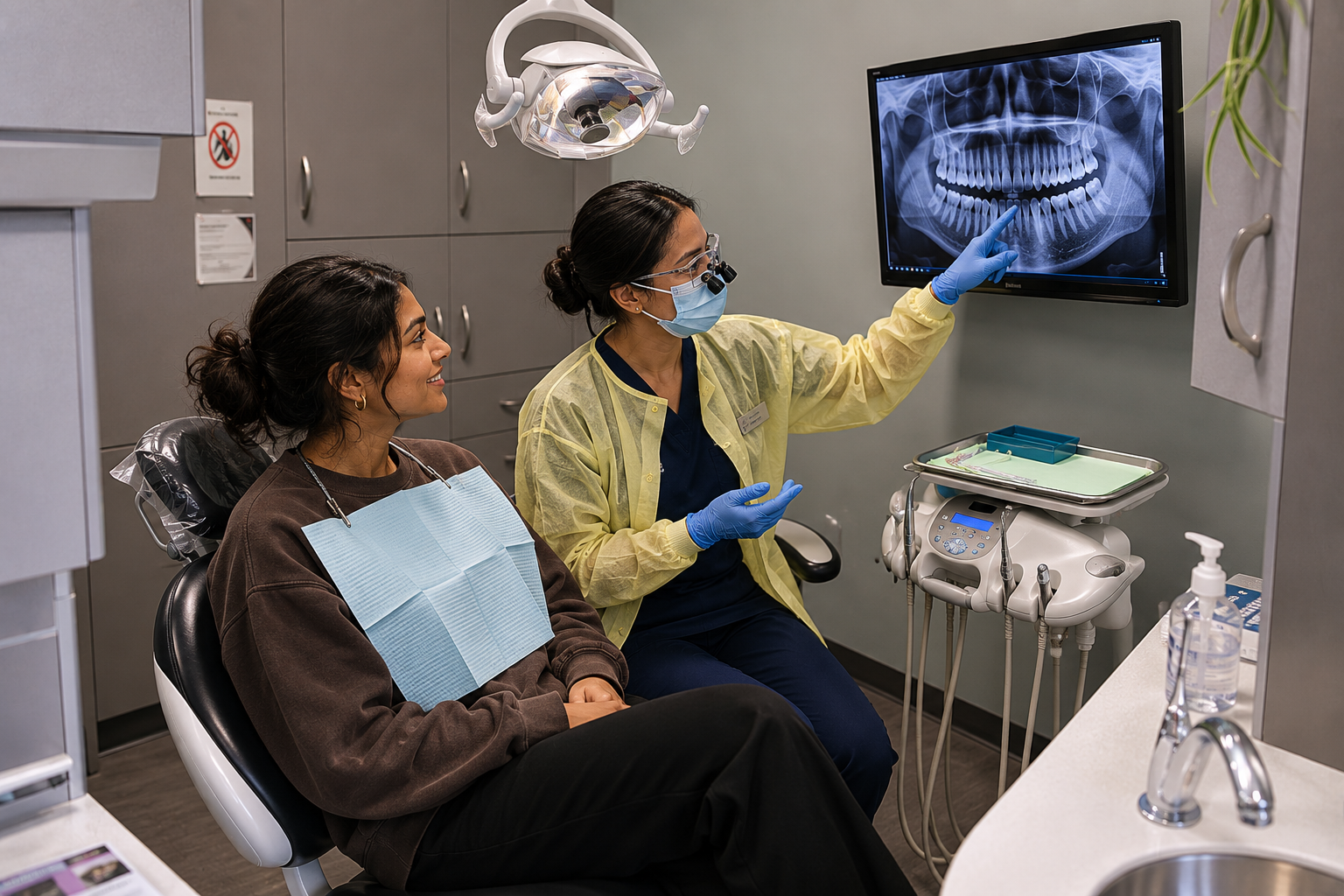
At your initial visit, we will examine the injured tooth and surrounding tissues, take x-rays, and assess the extent of any damage. Some pulp injuries are not immediately detectable, the tooth may test as vital at first but develop complications later.
For this reason, follow-up appointments over the months following a dental trauma are an important part of care. We monitor tooth colour, vitality, and x-ray appearance over time to detect any changes that may indicate the pulp is not recovering as expected.
Treatment options
Treatment depends on the type and severity of the injury and findings at assessment. Options may include:
- Observation and monitoring, for injuries where the pulp appears to be healthy and the tooth is stable
- Splinting, if the tooth is mobile or has been displaced, it may be temporarily stabilised with a splint attached to adjacent teeth
- Root canal treatment, if the pulp is found to be non-vital or infected during monitoring
- Crown or restoration, to repair any fractured portion of the tooth
- Extraction, only if the tooth cannot be maintained due to the extent of the injury
Long-term follow-up
Traumatized teeth often require monitoring over months or years rather than a single treatment episode. The pulp's response to trauma can evolve over time, and complications, such as gradual tooth discolouration, root resorption, or delayed infection, can develop well after the initial injury.
We will discuss a monitoring schedule appropriate to your specific injury and advise you on what changes to watch for between appointments.
About our endodontic services
Endodontic services at Wildwood Dental Clinic are provided by our general dentist team. Our dentists are not licensed specialists in endodontics.
Have questions about a dental injury?
Call 306.374.7272 or request an appointment online.