
Wildwood Dental Clinic
Children's Dentistry
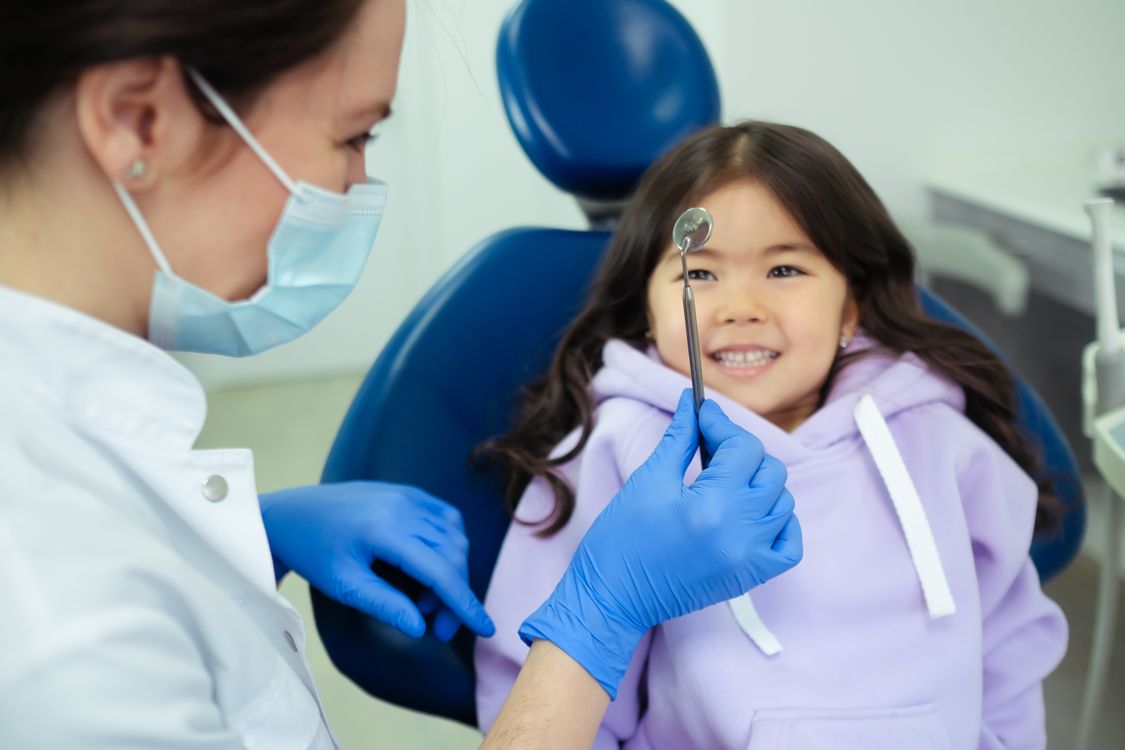
Early dental visits help children develop a positive relationship with oral care and give our team the opportunity to monitor developing teeth and jaws from the very start.
Children's dental services
Gentle care at every stage
From your child's first visit to their teenage years, we provide the preventive and age-appropriate dental care they need to grow up with healthy teeth and a positive relationship with the dentist.
Exams & Cleanings
Routine dental exams and professional cleanings tailored to your child's age, monitoring tooth development, gum health, and cavity risk at every visit.
Learn MoreInfant Oral Care
We recommend your child's first dental visit by age one or within six months of their first tooth. Early visits establish healthy habits and a positive dental experience from the start.
Learn MoreComfort Techniques
Our team uses gentle, child-friendly techniques to keep appointments positive. Nitrous oxide is available for children who need a little extra help staying calm and comfortable.
Learn MoreFluoride Treatments
In-office fluoride application delivers a concentrated dose to strengthen developing enamel and reduce cavity risk in children who may benefit from additional protection.
Learn MoreDental Sealants
Thin protective coatings applied to the chewing surfaces of back teeth, sealing the deep grooves where decay most commonly begins in children and teenagers.
Learn MoreX-Rays & Imaging
Digital x-rays for children are taken based on age and clinical need, not a fixed schedule. When indicated, they detect decay between teeth and allow us to monitor jaw and tooth development.
Learn MoreSpace Maintainers
When a primary tooth is lost too early, a space maintainer holds the gap open so the permanent tooth has room to come in correctly without crowding.
Learn MoreDental services for children at Wildwood Dental Clinic are provided by our general dentist team. Our dentists are not licensed specialists in pediatric dentistry.
When should my child first see a dentist?
The general recommendation is to bring your child in by their first birthday, or within six months of their first tooth appearing, whichever comes first. This may feel early, but the first visit serves a practical purpose: it establishes a baseline and lets our team check that primary teeth are coming in normally.
Just as importantly, early visits help children get comfortable in the dental environment. A child who has visited the dentist regularly since infancy is far less likely to develop dental anxiety later on. Each short, positive visit builds familiarity with the sounds, smells, and sensations, so that when more involved care is eventually needed, it feels routine rather than unfamiliar.
What's included in a children's dental exam?
Children's dental appointments are tailored to the child's age and cooperation level. A typical visit may include:
-
Examination of teeth, gums, and jaw development
We check that primary teeth are erupting in the expected sequence and that the gums and jaw are developing normally.
-
X-rays when appropriate
Dental x-rays for children are taken based on age, risk level, and what can be seen clinically, not on a fixed schedule. When indicated, they help us detect decay between teeth that is not visible otherwise.
-
Cleaning and polish
Removing plaque and tartar accumulation and polishing teeth to leave them clean.
-
Fluoride application if indicated
A fluoride treatment to help strengthen developing enamel, if appropriate for the child's age and risk level.
-
Home-care guidance for parents
Practical guidance on brushing technique, diet, and habits, tailored to the child's age.
Preventive care for developing teeth
Two preventive treatments are particularly valuable for children: sealants and fluoride applications.
Dental sealants are thin protective coatings applied to the chewing surfaces of back teeth, where the grooves and pits can trap food and are difficult to clean. They are typically applied to permanent molars shortly after they erupt, usually between ages 6 and 12.
Fluoride treatments, applied at the dental office, deliver a higher concentration of fluoride than toothpaste alone and can help strengthen enamel and reduce cavity risk in children who may benefit. Whether a fluoride treatment is appropriate will be discussed at each visit.
Making dental visits comfortable for children
Our team takes an unhurried approach with younger patients. Rushing a child through a dental visit rarely ends well, for the child or for the quality of care. We pace each appointment to the child's comfort level.
The tell-show-do technique is a mainstay of paediatric dental care: we explain what we are about to do in simple terms, show the child the instrument or process, and then gently proceed. This reduces the element of surprise and helps children feel involved rather than passive.
For children who experience anxiety or have difficulty with dental procedures, nitrous oxide (laughing gas) is available. It takes effect quickly, produces a relaxed and calm feeling, and wears off rapidly after the mask is removed, so children are fully alert before leaving the office.
Common dental issues in children
Early childhood caries (baby bottle tooth decay)
Cavities in primary teeth are not simply a cosmetic concern, untreated decay in baby teeth can cause pain, affect eating and speech development, and impact the spacing of permanent teeth. Primary teeth hold space for the adult teeth coming in behind them.
Thumb-sucking and pacifier habits
Prolonged thumb-sucking or pacifier use beyond age 3–4 can affect the development of the bite and the position of front teeth. Most children naturally stop on their own; if the habit continues, we can discuss whether any monitoring or intervention is appropriate.
Early tooth loss and space maintenance
If a primary tooth is lost prematurely, due to decay or injury, the surrounding teeth can drift into the empty space, reducing room for the permanent tooth. A space maintainer is a simple appliance that can hold the space open until the adult tooth is ready to erupt.
How often should children visit the dentist?
For most children, a check-up and cleaning every six months is a good starting point. However, some children, particularly those with a higher cavity risk or a history of dental issues, may benefit from more frequent visits.
Our team will recommend a recall interval that fits your child's individual needs, and that recommendation may change as their oral health and risk factors evolve over time.
Bringing your child in for the first time?
Call 306.374.7272 or book an appointment online.