
Endodontic Care
Cracked Tooth
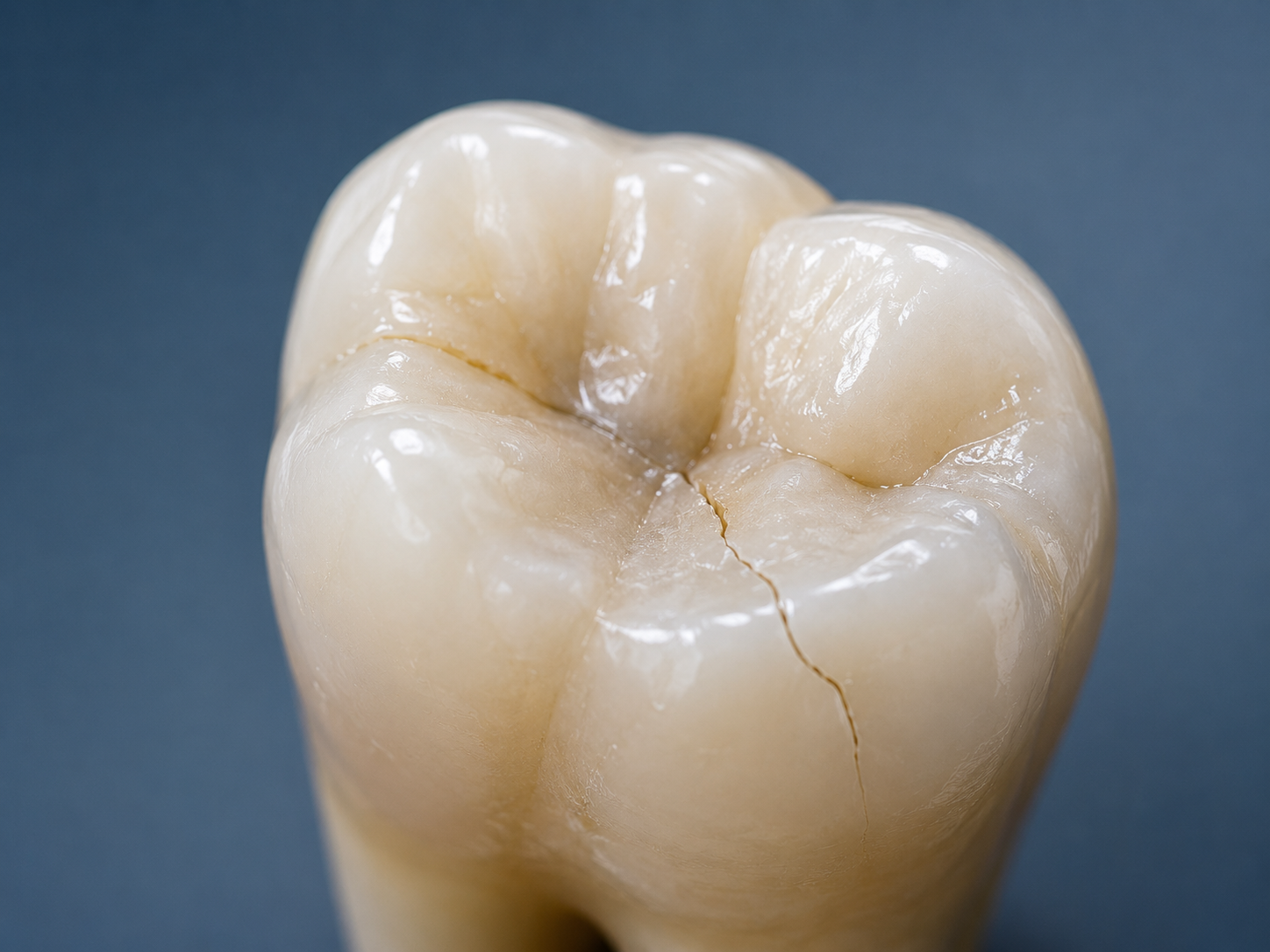
Cracked tooth syndrome involves pain or discomfort related to a crack in a tooth, often intermittent and sometimes difficult to pinpoint. Understanding the type and extent of the crack guides the appropriate treatment.
What is cracked tooth syndrome?
Cracked tooth syndrome refers to pain or sensitivity associated with a crack in a tooth, particularly pain that occurs when biting or chewing, or a sharp momentary pain when releasing bite pressure. The discomfort is often intermittent, and patients may find it difficult to identify which tooth is causing it or under what conditions the pain occurs.
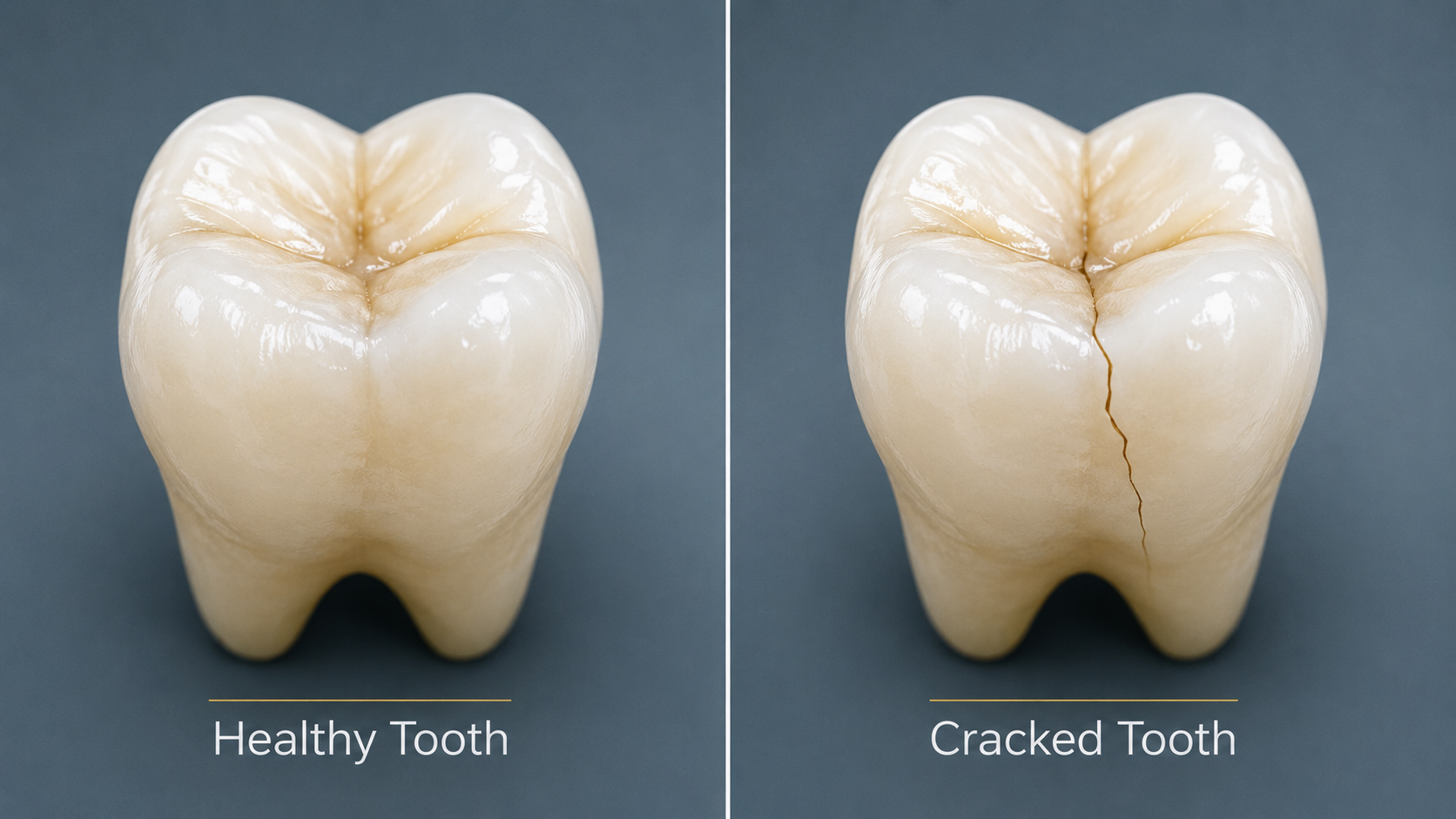
Unlike a fracture that splits the tooth visibly, many cracks are incomplete, they extend into the tooth structure but do not result in a broken-off piece. This makes them harder to detect and harder to diagnose definitively.
Why cracks develop
Tooth structure can crack for a number of reasons:
- Grinding and clenching (bruxism) , Sustained clenching or grinding places significant repetitive force on the teeth, which can cause cracks over time.
- Chewing hard objects , Biting down on hard foods, ice, or non-food items can initiate or extend a crack.
- Large restorations , Teeth with large fillings have less intact tooth structure to support the biting load, which can increase the risk of cracking over time.
- Temperature changes , Repeated exposure to extreme temperature changes can contribute to crack development in some teeth.
- Trauma , A direct blow or impact can crack a tooth even if the tooth does not visibly fracture.
Types of tooth cracks
Craze lines
Fine surface cracks confined to the outer enamel. They are very common and do not typically require treatment, they are not associated with pain and do not threaten the structural integrity of the tooth.
Fractured cusp
A piece of the biting surface breaks away, often around an existing large filling. The fracture usually does not reach the pulp, and the tooth can be restored with a new filling or a crown.
Cracked tooth
A crack that begins at the biting surface and extends downward toward the root. The crack has not yet split the tooth into separate pieces. Depending on how far it extends, treatment may involve a crown, root canal therapy, or both. The sooner a crack like this is addressed, the more options are available.
Split tooth
The crack has extended through the tooth, resulting in distinct segments. A split tooth cannot typically be saved intact, partial retention may be possible in some cases, but often extraction is required.
Vertical root fracture
A fracture that originates in the root and extends upward. These are often asymptomatic for an extended period and may only be detected when the surrounding bone and gum begin to show signs of infection. Extraction is usually required.
Symptoms
The symptoms of a cracked tooth can vary considerably. Common presentations include:
- Sharp pain when biting down, or upon releasing bite pressure
- Sensitivity to temperature, cold or heat, that may linger
- Intermittent discomfort that is difficult to reproduce predictably
- Difficulty identifying which tooth is causing the pain
The intermittent nature of symptoms can make cracked tooth syndrome one of the more challenging dental conditions to diagnose.
How cracks are diagnosed
There is no single test that reliably detects all cracks. Diagnosis typically involves a combination of approaches:
- A detailed history of when and how the pain occurs
- Bite tests using a bite stick to reproduce and isolate the symptom
- Transillumination, shining a light through the tooth to reveal cracks
- Visual examination, including staining agents that can highlight crack lines
- X-rays, though many cracks are not visible on x-rays
In some cases the crack may not be identifiable until the tooth is examined under magnification or in certain lighting conditions. We will take whatever time is needed to investigate the source of your symptoms carefully.
Treatment
Treatment depends on the type, location, and extent of the crack:
- A crown is often recommended to hold the tooth together and prevent the crack from extending further with biting forces.
- If the crack has reached the pulp, root canal treatment may be needed before the crown is placed.
- A split tooth or vertical root fracture may require extraction if the tooth cannot be maintained.
Cracks that extend toward or into the root are generally more difficult to treat, and early detection is associated with a wider range of management options. If you are experiencing intermittent biting pain or sensitivity, it is worth having it assessed sooner rather than later.
About our endodontic services
Endodontic services at Wildwood Dental Clinic are provided by our general dentist team. Our dentists are not licensed specialists in endodontics.
Concerned about a cracked tooth?
Call 306.374.7272 or book an assessment.