
TMJ & Jaw
TMJ Diagnosis & Assessment
Identifying the source of jaw pain, clicking, or related symptoms requires a careful assessment of the joint, muscles, bite, and patient history. Understanding what is contributing to your symptoms is the foundation for choosing an appropriate management approach.
What are temporomandibular disorders?
Temporomandibular disorders (TMD) is a broad category that encompasses conditions affecting the temporomandibular joint and the muscles involved in jaw movement. The range includes:
- Disc displacement disorders , The cushioning disc within the joint shifts from its normal position, which can cause clicking, popping, or restricted movement.
- Arthritis of the joint , Degenerative or inflammatory changes within the joint itself, which can cause pain and limit jaw function over time.
- Myofascial pain , Pain originating from the muscles of the jaw and face, often related to clenching, grinding, or sustained muscle tension. This is one of the more common presentations of TMD.
In many patients, more than one of these components is present simultaneously, which is one reason assessment is important before treatment is selected.
Common symptoms
The symptoms of TMD can vary in character and location, and some may not be immediately associated with the jaw:
- Jaw pain or soreness, often worse in the morning if clenching or grinding occurs during sleep
- Clicking or popping sounds when opening or closing the mouth
- Limited mouth opening, or the jaw deviating to one side when opening
- Headaches, particularly around the temples or at the back of the head, often described as tension-type headaches
- Neck and shoulder muscle tension
- Earache or a sense of fullness in the ear, without an identified ear infection
- Tooth sensitivity or pain from clenching or grinding
How we assess TMJ conditions
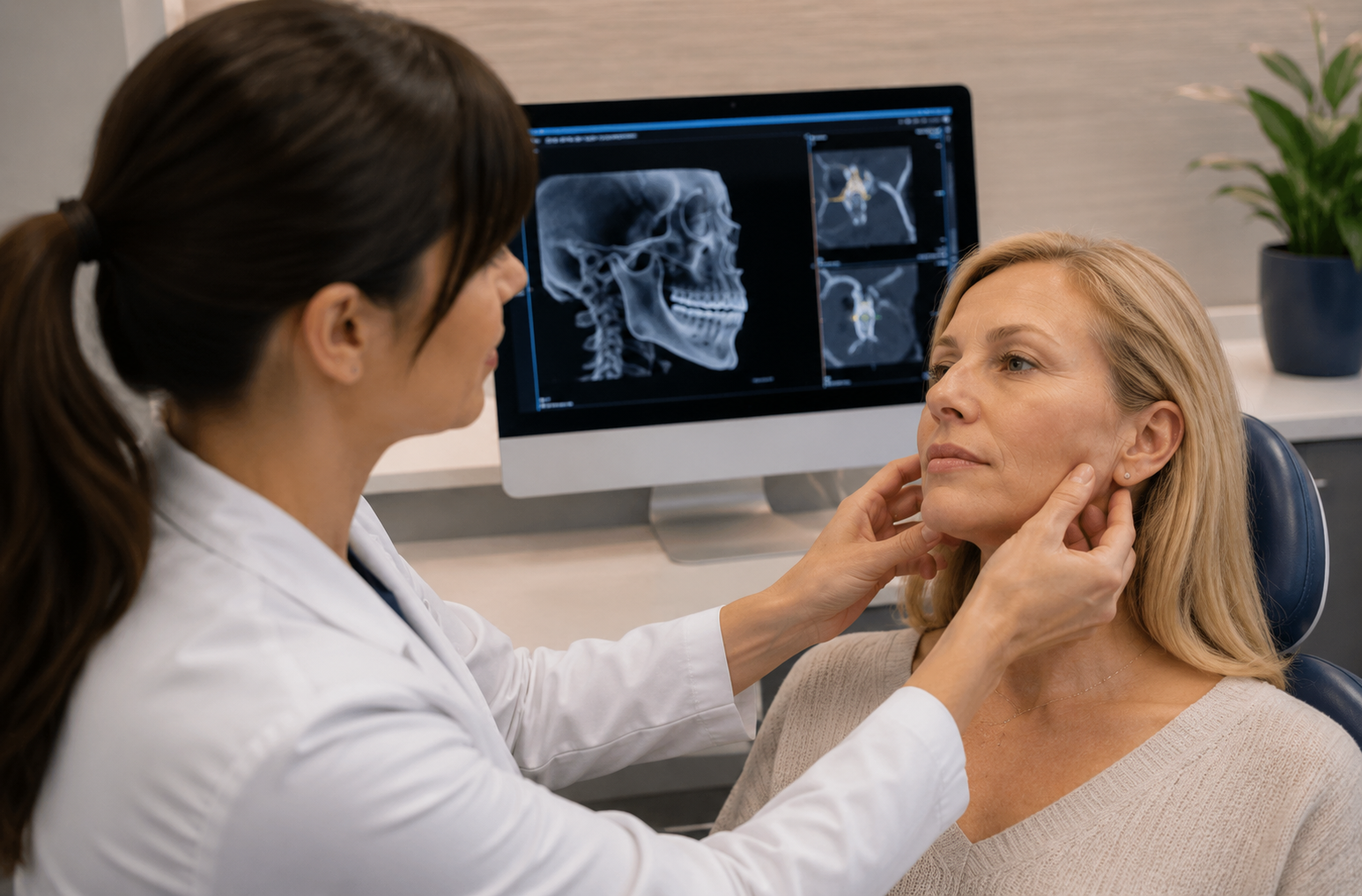
A TMJ assessment at Wildwood Dental Clinic begins with a detailed conversation about your symptoms, when they occur, how long you have had them, what makes them better or worse, and what other health conditions or medications may be relevant.
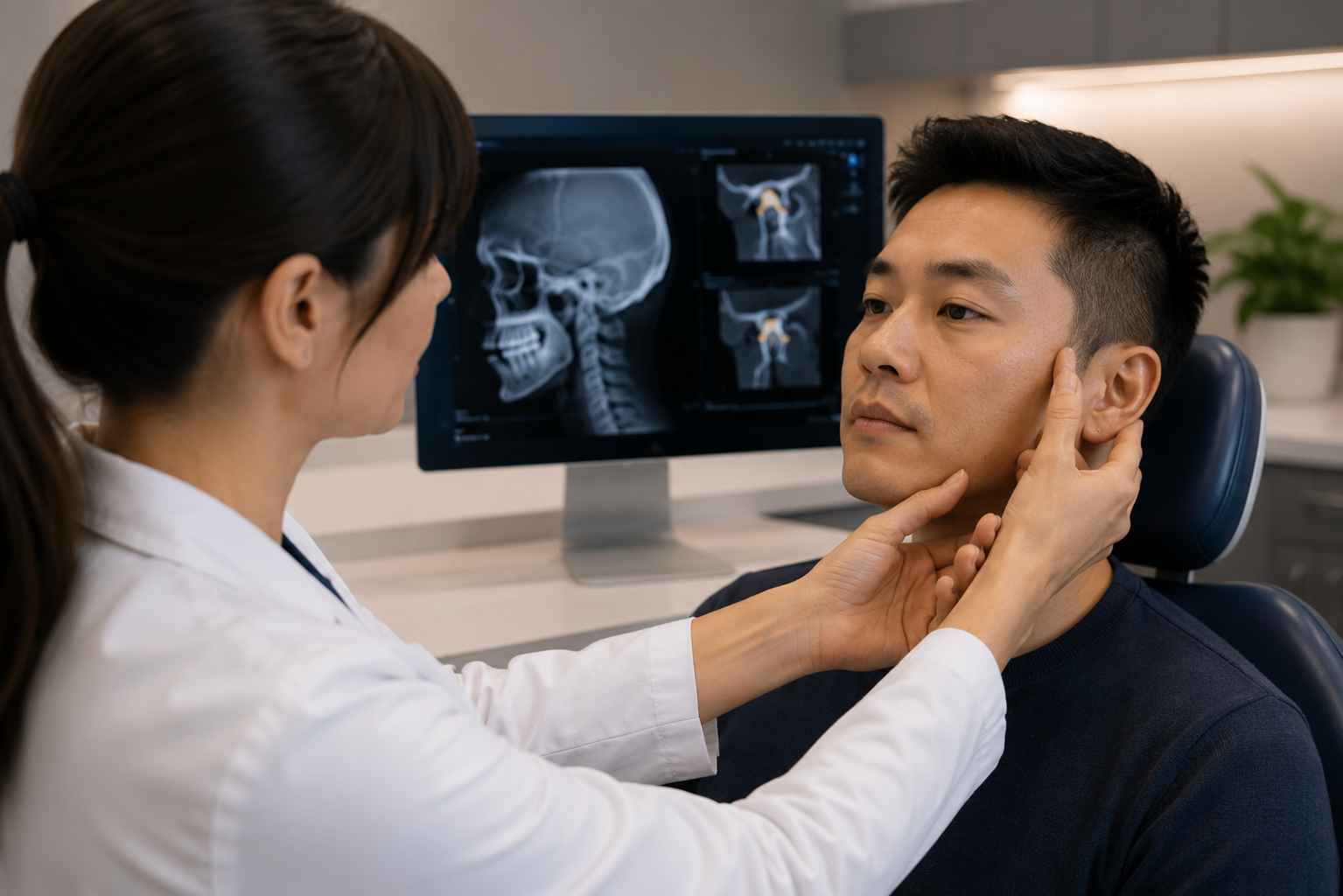
The clinical examination includes:
- Assessment of jaw opening range and movement pattern
- Listening and feeling for clicking or crepitus in the joint
- Palpation of the jaw muscles and surrounding areas to identify tender points
- Bite evaluation, how the upper and lower teeth come together
- Examination of the teeth for signs of wear from grinding or clenching
Imaging may be used where clinically indicated. A panoramic x-ray can provide a broad view of the jaw joint and surrounding structures. In some cases, more detailed imaging such as cone beam CT or MRI may be recommended, these are typically arranged through a specialist or imaging facility.
When referral may be appropriate
Many patients with TMD can be managed well with conservative dental treatment. However, some presentations, particularly those involving significant joint changes, locking, or symptoms that have not responded to initial treatment, may warrant referral to an oral and maxillofacial surgeon or another specialist with expertise in TMD.
We will advise you honestly about whether your situation is one we can manage in practice, or whether specialist assessment would be more appropriate. In either case, we aim to coordinate care and keep you informed throughout the process.
Starting conservatively
For most TMD presentations, the evidence supports beginning with conservative, reversible treatments rather than more invasive options. Conservative management may include:
- A custom night guard to reduce the effects of grinding and clenching
- Referral to a physiotherapist experienced in jaw and craniofacial conditions
- Dietary modification, avoiding hard, chewy, or tough foods while symptoms are active
- Guidance on jaw rest exercises and self-care strategies
- Stress management support, particularly where clenching appears to be stress-related
More involved interventions, such as botulinum toxin injections or bite adjustment, are considered on an individual basis when conservative measures have been tried first.
Have questions about TMJ symptoms?
Call 306.374.7272 or book an assessment.