
Children's Dentistry
Infant Oral Care & First Visits
Oral health begins before the first tooth appears. Knowing what to expect and how to care for your infant's mouth sets the stage for a healthy dental future.
Dental services for children at Wildwood Dental Clinic are provided by our general dentist team. Our dentists are not licensed specialists in pediatric dentistry.
When to schedule your baby's first dental visit
The Canadian Dental Association recommends that a child's first dental visit happen by age 1, or within six months of the first tooth appearing, whichever comes first. This is earlier than many parents expect, but there is good reason for it.
The first visit is less about treatment and more about establishing a dental home, checking that early development is on track, and giving parents practical guidance on home care. Starting early also means your child begins building familiarity with the dental environment from a young age, before any anxiety has a chance to develop.
What happens at the first visit
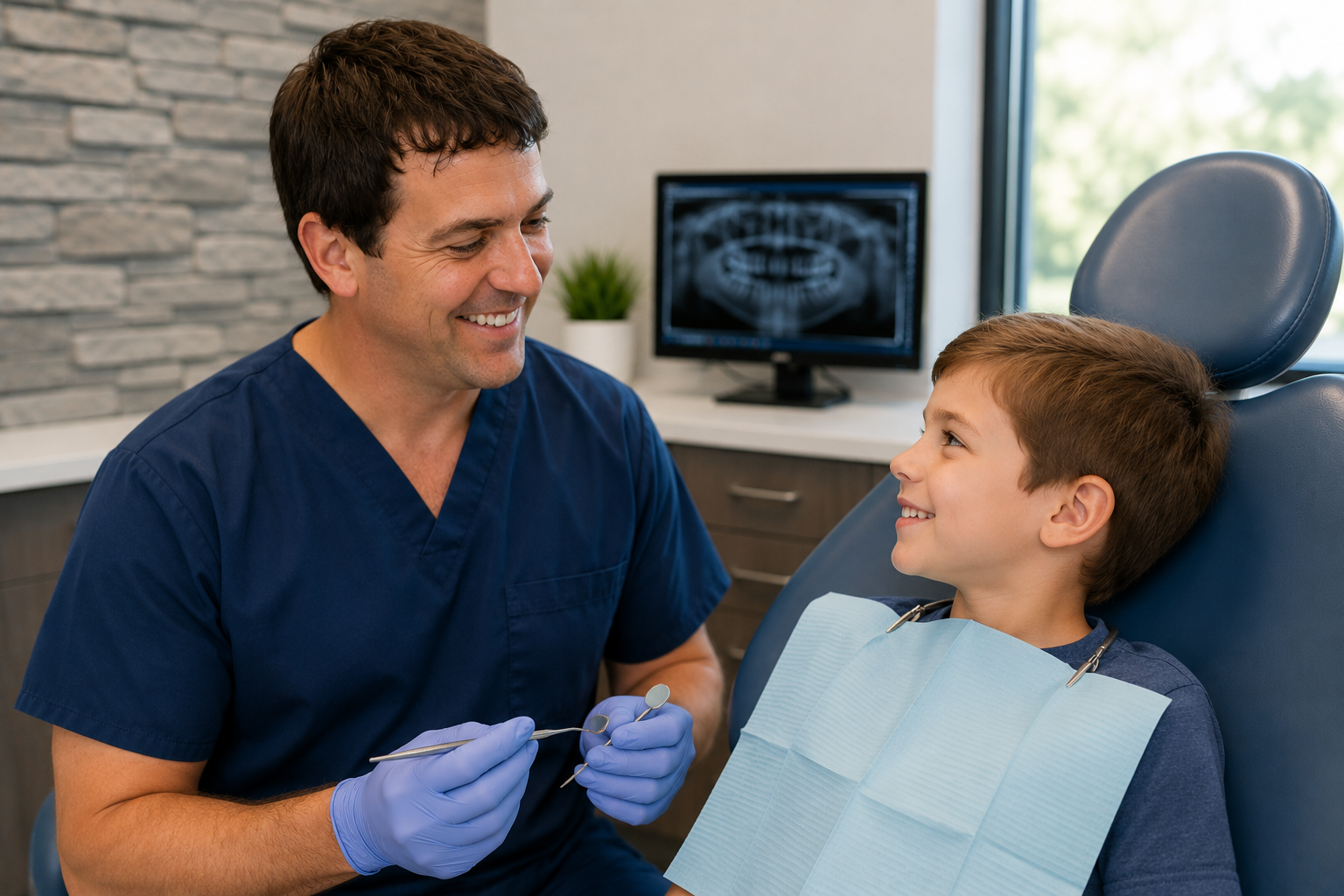
The first visit is brief and gentle. For very young infants, a parent may sit in the chair with the baby resting in their lap. We perform a quick exam of the gums, any teeth that have erupted, the bite, and soft tissues, checking that everything looks healthy and is developing normally.
We use this visit as an opportunity for parent education: discussing home care routines, what to expect as more teeth come in, feeding habits, and what signs might warrant a call or follow-up. There is rarely any discomfort involved, and the visit is typically short.
Caring for your baby's mouth before teeth appear
Even before the first tooth erupts, it is a good idea to wipe your baby's gums with a clean, damp cloth after feedings. This helps remove milk residue and begins establishing a routine that will carry over naturally once teeth begin appearing.
When teeth begin coming in
Once the first tooth appears, begin brushing with a soft infant toothbrush and water. The Canadian Dental Association recommends introducing a small amount of fluoride toothpaste at this stage, a grain-of-rice sized amount until age 3, and a pea-sized amount from ages 3 to 6. Parents should brush the child's teeth (or supervise brushing) until the child has the dexterity to do a thorough job independently, usually around age 7 or 8.
Feeding habits and early childhood caries
Early childhood caries, sometimes called baby bottle tooth decay, is a pattern of decay in infants and toddlers, often affecting the upper front teeth. It can occur when a baby is frequently exposed to milk, formula, or juice for extended periods, particularly when put to bed with a bottle.
If your baby falls asleep at the breast or with a bottle, try to gently remove it once they are drowsy and before they fall fully asleep. Water is fine if a bottle at bedtime is part of your child's routine after other liquids have been cleared. Our team can offer more specific guidance at your child's first visit.
Teething: what's normal
Teething typically begins around 6 months of age, though there is wide variation. Common signs include drooling, irritability, and a desire to chew on things. Mild fussiness and gum soreness are typical; high fever or diarrhea are not attributed to teething and should be assessed by your child's physician.
Chilled (not frozen) teething rings and gentle gum massage with a clean finger can provide some relief. If you have questions about what is normal during teething, we are happy to help.
Book your baby's first visit
Call 306.374.7272 or request an appointment online.