
Restorative Dentistry
Dentures
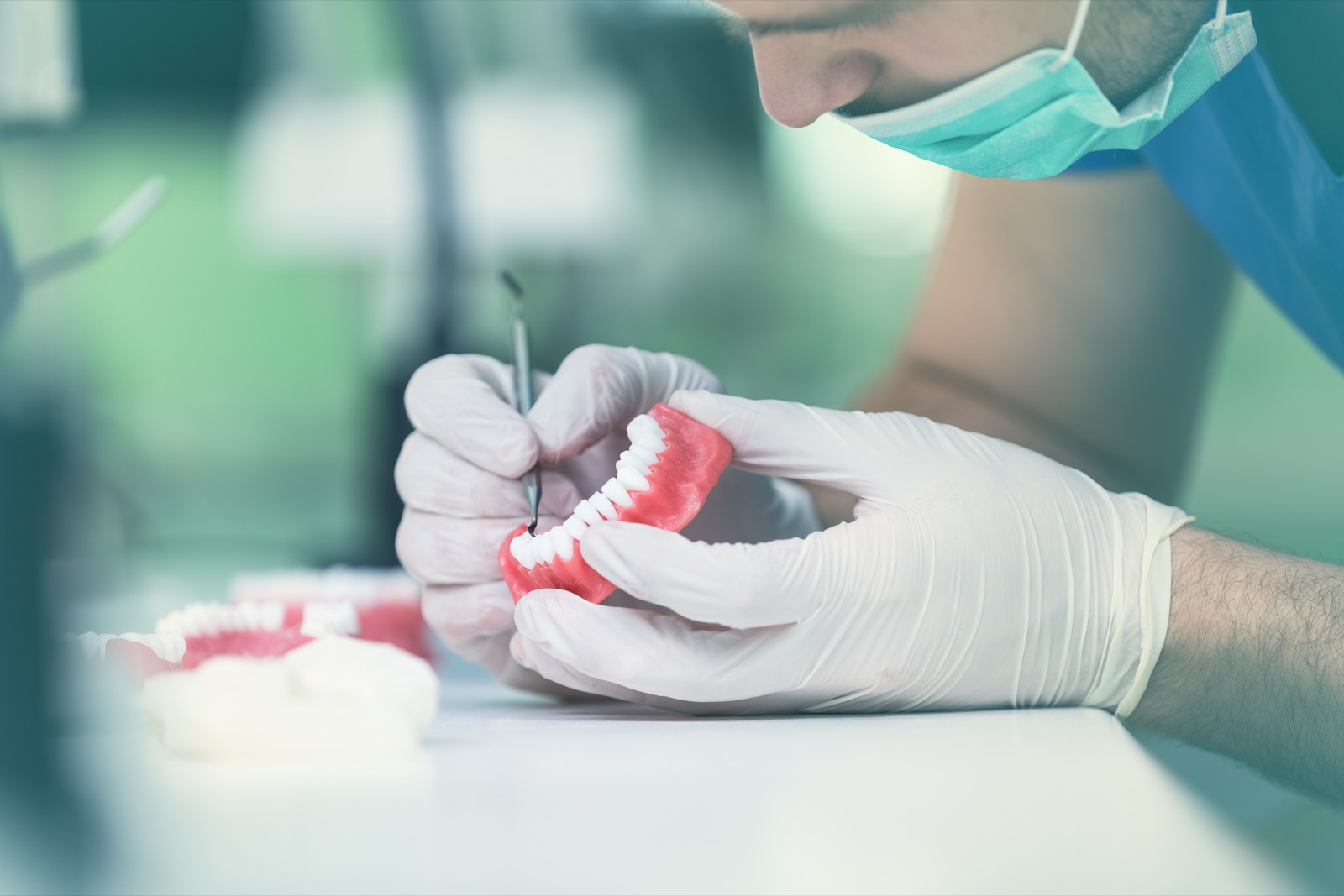
Custom-fitted dentures restore the ability to eat, speak comfortably, and maintain facial structure when multiple teeth are missing. Our team works with you through multiple appointments to achieve a proper fit.
Types of dentures
The right type of denture depends on how many teeth are missing and whether any natural teeth remain. Your dentist will help determine which option fits your oral health and lifestyle.
Complete dentures
Replace an entire upper or lower arch of teeth. Complete dentures rest on the gums and are held in place by suction and the natural contours of the mouth. They are made after any remaining teeth have been removed and the gum tissue has healed.
Partial dentures
Used when some natural teeth remain. A partial denture fills in the gaps left by missing teeth and is typically held in place with clasps or precision attachments that connect to the remaining natural teeth. It is removable for cleaning.
Implant-supported dentures
Attached to dental implants surgically placed in the jawbone, implant-supported dentures offer greater stability and retention than conventional dentures. They do not shift during eating or speaking, and the implants help preserve the bone in the jaw.
The denture fitting process
Getting dentures is a multi-appointment process. The number of visits required will vary based on the type of denture and your individual circumstances, but generally includes:
- Initial consultation and examination to assess your oral health and discuss your options
- Impressions and measurements of your mouth to guide the fabrication
- A try-in appointment where you evaluate the fit, bite, and appearance before the final denture is made
- Delivery of the finished denture with instructions for use and care
- Follow-up adjustments as needed, minor modifications are common as your mouth adapts
Adjusting to dentures
An initial adjustment period is normal and expected with new dentures. Speech may feel slightly different at first, reading aloud or practising words can help. Eating also takes some time to relearn; starting with softer foods and working up to a wider range is typically recommended.
Minor soreness or irritation in the first weeks is common as your gums adapt. If discomfort persists or is significant, contact us, adjustments can usually address these issues quickly.
Caring for your dentures
Dentures require daily cleaning, just like natural teeth. Remove them after meals and brush them with a soft denture brush and non-abrasive cleaner, regular toothpaste can scratch the surface. Soak them overnight in a denture solution or plain water to prevent them from drying out.
Even if you have no remaining natural teeth, continuing to see your dentist regularly is important. The shape of the bones and gums changes over time, and dentures may need periodic adjustment or relining to maintain a comfortable, secure fit. Ill-fitting dentures can cause irritation and make eating difficult.
Considering implant-supported dentures?
For patients looking for a more stable alternative to conventional dentures, implant-supported options attach directly to implants in the jawbone, reducing movement and helping preserve bone over time. Ask us whether this option may be suitable for you. A consultation and assessment are required.
Learn about dental implantsReady to restore your smile?
Call 306.374.7272 or request an appointment online.