
Cosmetic Dentistry
Dental Bonding
Composite resin can be shaped and colour-matched to your natural teeth to address chips, small gaps, or discolouration, often in a single appointment with little or no tooth preparation required.
What is dental bonding?
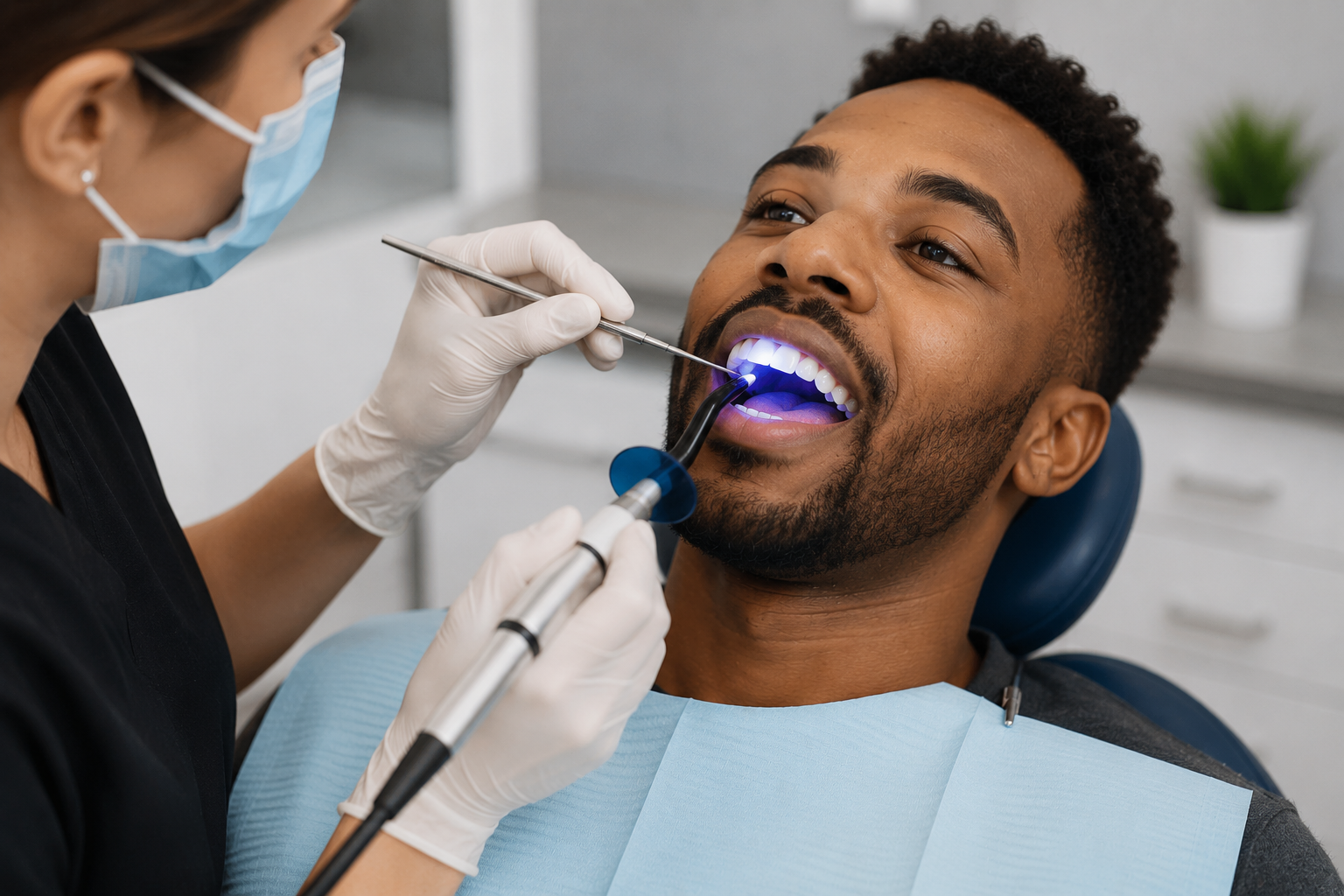
Dental bonding uses composite resin, the same tooth-coloured material used for tooth-coloured fillings, applied directly to the tooth surface and sculpted by hand. The resin is matched to the shade of your surrounding teeth, hardened with a curing light, and polished to blend with the natural tooth.
It is commonly used to repair chipped teeth, fill small gaps between teeth, cover areas of discolouration, and make minor adjustments to tooth shape or length.

Advantages of dental bonding
- Minimal tooth preparation, bonding typically requires little to no removal of natural tooth structure, unlike veneers or crowns.
- Single visit, the procedure is completed in one appointment, with no need for laboratory fabrication or temporary restorations.
- Reversible in some cases, because minimal enamel is removed, bonding can sometimes be replaced or removed without significant impact to the underlying tooth, depending on the situation.
What the procedure involves
Bonding is straightforward for most patients:
Surface preparation
The tooth surface is lightly etched with a mild conditioning liquid to help the resin adhere. A bonding agent is then applied.
Resin application and shaping
The composite resin, selected to match your tooth shade, is applied to the tooth and sculpted by hand into the desired shape. This step requires skill and attention to detail to ensure a natural result.
Curing and polishing
The resin is hardened with a curing light, then trimmed, shaped, and polished to blend with the surrounding tooth surface.
Limitations to be aware of
Composite resin is a durable material but not as strong as porcelain veneers or crowns. There are some practical limitations:
- Bonding can chip or fracture under significant force, particularly on teeth that take heavy biting load
- The resin can stain over time with coffee, tea, red wine, or tobacco, though it can be polished or replaced
- It is generally most appropriate for smaller cosmetic concerns; larger changes may be better addressed with veneers or other restorations
Caring for bonded teeth
Bonded teeth are maintained with normal brushing and flossing. To protect the resin, avoid biting fingernails, chewing ice, or using bonded teeth to open packages. Regular dental checkups allow us to monitor the condition of bonding over time, and touch-ups or replacement can be done if needed.
Considering a cosmetic treatment?
Call 306.374.7272 to book a consultation.