
Cosmetic Dentistry
Professional Teeth Whitening
Staining and discolouration are common concerns. Professional whitening, carried out under dental supervision, uses higher-concentration agents than over-the-counter products, with a more controlled and consistent approach.
What causes tooth discolouration?
Tooth discolouration can have several causes, and the underlying cause affects how well whitening will work. Common contributors include:
- Foods and beverages, coffee, tea, and red wine are among the most common sources of surface staining over time.
- Tobacco use, both smoking and chewing tobacco can cause significant staining.
- Aging, enamel naturally thins over time, allowing the darker dentine beneath to show through more.
- Certain medications, some antibiotics (such as tetracycline) and other medications can cause intrinsic discolouration that may be harder to address with whitening alone.
Professional vs. over-the-counter whitening
Over-the-counter whitening products, strips, toothpastes, and trays, are widely available and vary considerably in concentration and effectiveness. They can be a starting point for mild staining, but they are generally lower in concentration than professional agents.
Professional whitening uses higher-concentration peroxide gels applied under dental supervision. This allows for a more controlled application, appropriate gum protection, and the ability to tailor treatment to your individual situation. Before any whitening, a dental exam helps confirm that your teeth and gums are healthy enough to proceed.
Whitening options we offer
In-Office Whitening
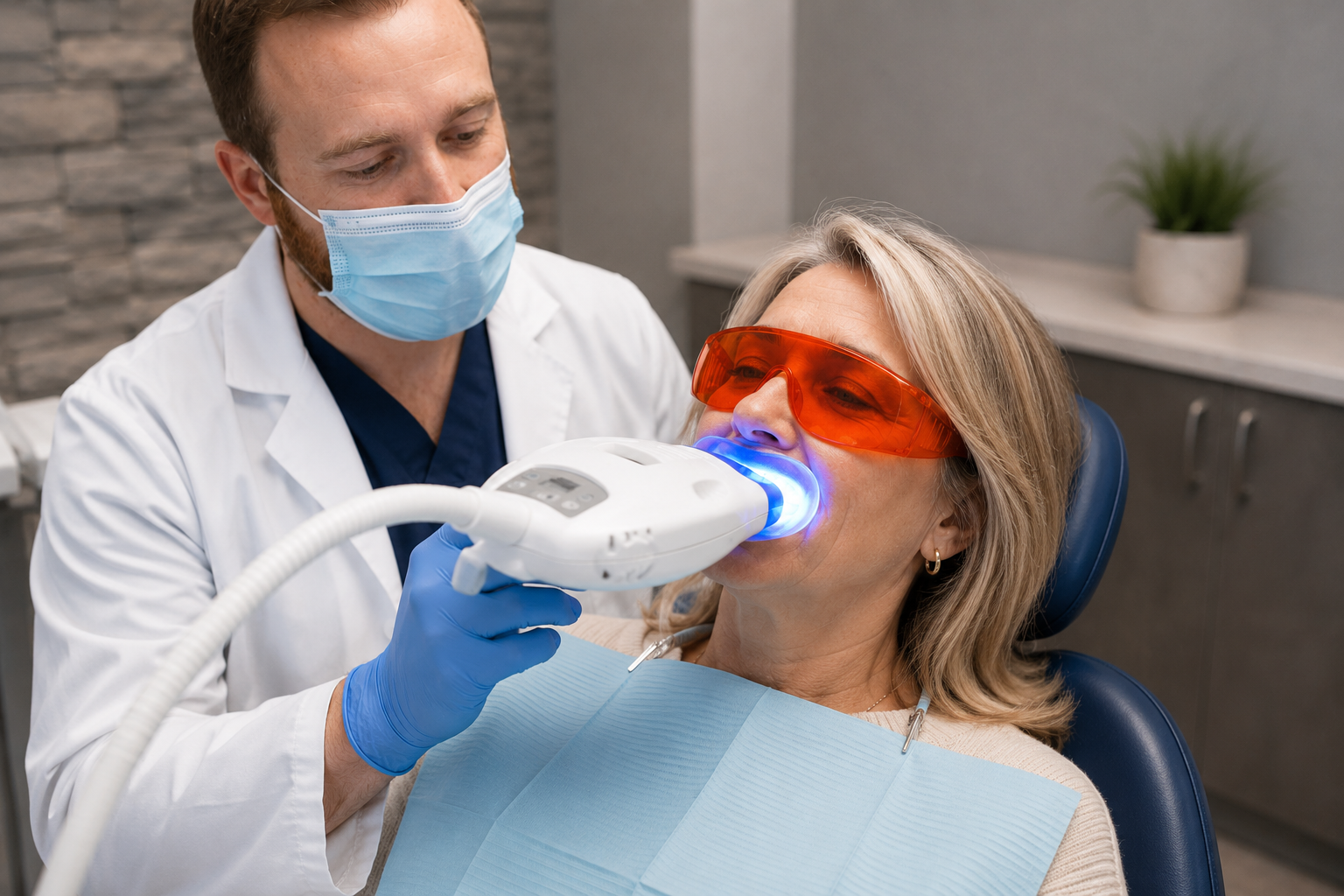
Completed in a single appointment at the clinic. A higher-concentration gel is applied by our team with appropriate protection for the gums. Results are visible after one session, though the degree of change varies by individual.
Take-Home Trays
Custom-fitted trays are made from impressions of your teeth, ensuring even coverage. You apply professional-grade gel at home over a period of days to weeks, following the prescribed schedule. This approach allows gradual whitening in a familiar setting.
What to expect
Some patients experience temporary tooth sensitivity during or after whitening treatment. This is a common and expected response, it typically resolves within a day or two once treatment is complete. If sensitivity is a concern for you, let us know before we begin; there are steps we can take to help manage it.
Results vary from person to person depending on the original shade, the cause of discolouration, and the type of whitening used. We'll give you a realistic picture of what to expect during your consultation.
Maintaining your results
Whitening results are not permanent, teeth can re-stain over time, particularly with ongoing exposure to staining foods and drinks or tobacco. Reducing intake of coffee, tea, and red wine, or rinsing with water after consuming them, can help. Regular professional cleanings also play a role in maintaining tooth appearance.
When whitening may not be appropriate
Whitening agents work on natural tooth enamel. They do not change the colour of dental restorations such as crowns, veneers, or bonding, if these are in visible areas, they may appear mismatched after whitening. Additionally, some causes of discolouration (such as intrinsic staining from certain medications) may not respond well to conventional whitening. In these cases, alternative cosmetic options may be worth discussing.
Considering a cosmetic treatment?
Call 306.374.7272 to book a consultation.